
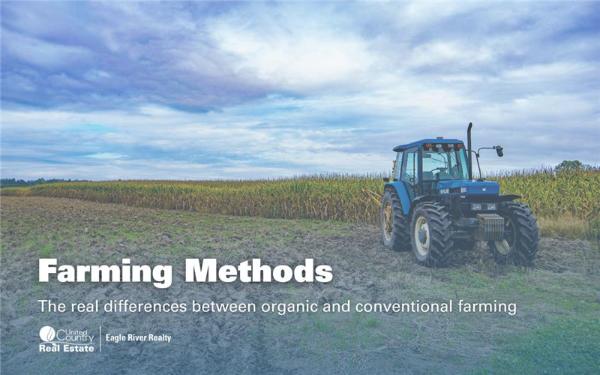
Organic vs. Conventional Farming: What Every Land Buyer Should Know
When people start searching for rural property or farmland, one of the first questions that comes up is how the land has been used—and more importantly, how it can be used. One of the biggest distinctions in agriculture today is between organic and conventional farming. Understanding the difference isn’t just helpful for farmers—it can directly impact land value, long-term investment potential, and how a property fits your goals.
What Is Organic Farming?
Organic farming focuses on working with natural systems rather than relying on synthetic inputs. This means avoiding chemical pesticides, herbicides, and synthetic fertilizers, while using practices like crop rotation, composting, and natural pest control. For a property to be officially labeled organic, it must meet standards set by organizations like the USDA and typically requires a transition period of about three years without prohibited substances.
From a real estate perspective, certified organic land can carry a premium. Buyers are often willing to pay more for land that’s already compliant because it saves time and effort. However, it’s important to verify documentation and understand the history of the soil before marketing or purchasing.
What Is Conventional Farming?
Conventional farming is the more widely practiced approach and often prioritizes efficiency and high yields. It typically uses synthetic fertilizers, pesticides, and herbicides, along with modern machinery and technology. For many landowners, this method provides predictable production and can be easier to manage on a large scale.
In real estate, conventionally farmed land is usually more readily available and may come at a lower initial cost. However, buyers should consider soil health, past chemical use, and whether the land could transition to organic if desired. These factors can influence both resale value and future use.
Key Differences That Impact Property Value
The organic vs. conventional debate goes beyond philosophy—it affects how land is marketed and valued. Organic properties often appeal to niche buyers, including specialty crop producers and eco-conscious investors. Conventional land tends to attract a broader audience focused on production and scalability.
Water sources, soil condition, and existing infrastructure all play a role, regardless of farming style. For example, land with strong natural fertility and good drainage may be a strong candidate for organic conversion, while highly mechanized operations may favor conventional methods.
Which Is Right for You?
There’s no one-size-fits-all answer. If your goal is sustainability, premium markets, or lifestyle farming, organic may be the better fit. If you’re focused on maximizing output or managing large acreage efficiently, conventional farming might make more sense. Many buyers today are also exploring hybrid approaches—using conventional methods while incorporating sustainable practices over time.
Have questions about farmland, rural properties, or investment opportunities? Contact Eagle River Realty today to learn more and explore available listings. (315) 824-8989